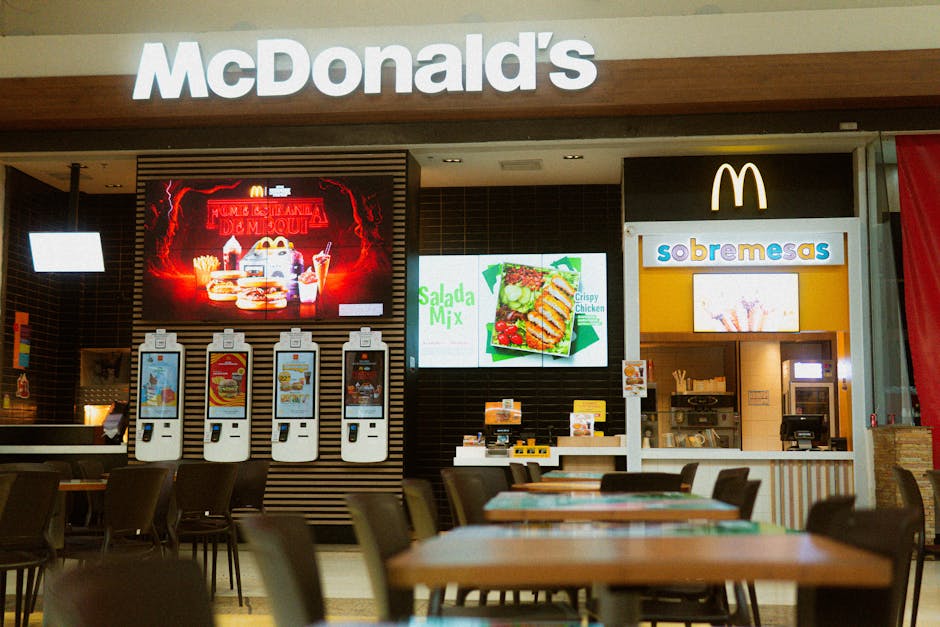
If you’ve ever killed twenty minutes at a McDonald’s table, nursing a coffee and scrolling your phone while the kids demolished a Happy Meal, that particular slice of fast-food leisure may be numbered.
McDonald’s is rolling back its free in-store Wi-Fi across locations in the United Kingdom, a move that’s been happening gradually but is now picking up pace. The chain, which has around 1,450 restaurants across the country, introduced complimentary Wi-Fi back in 2010, positioning itself as a place to linger rather than just grab and go.
For a lot of people, that mattered. Students revising between lectures, delivery drivers checking their apps, elderly customers killing time on a rainy Tuesday afternoon. Free Wi-Fi was quietly one of the more democratic things about the Golden Arches.
The company hasn’t made a loud announcement about it, which is rather the point. No press release, no fanfare, just a gradual disappearance that customers are noticing only when they go to connect and find nothing there. Complaints have been trickling onto social media for months, with regulars expressing genuine frustration.
“I used to go in with my laptop on a slow work-from-home day,” one regular customer noted on a UK consumer forum. “Now it’s just another place asking you to use your own data.”
McDonald’s hasn’t publicly confirmed a full national withdrawal, but the pattern across multiple sites in London, Manchester, Birmingham and beyond suggests this isn’t a series of isolated technical faults. It looks deliberate.
The reasoning, according to industry analysts, is likely a mix of cost-cutting and a push toward faster table turnover. Post-pandemic, fast food chains have been quietly redesigning the customer experience to be quicker, more transactional. Longer dwell times don’t suit that model.
There’s also the rise of McDelivery and the app, which McDonald’s has invested heavily in. If you’re ordering from your sofa anyway, why maintain the infrastructure to keep you comfortable inside?
Whether this nudges customers toward rivals like Greggs or Costa, which still offer connectivity in many locations, remains to be seen. But it does raise a broader question about what the high street fast-food experience is actually supposed to be in 2025, and whether convenience has finally swallowed any pretence of community.