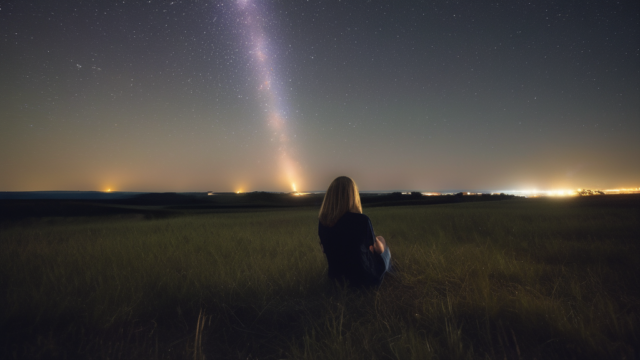
If you’ve been neglecting your back garden lately, this week might be the perfect excuse to step outside after dark and look up.
May’s full moon, traditionally known as the Flower Moon, rises on the night of Monday 12th May, reaching peak fullness at around 21:56 BST. It’s one of the more poetically named full moons in the calendar, earning its title from the abundance of wildflowers that bloom across the Northern Hemisphere this time of year.
The name itself comes from Native American traditions, recorded by farmers and settlers who used lunar cycles to track the seasons. Other cultures called it the Corn Planting Moon or the Milk Moon; the Flower Moon is simply the one that stuck.
This year’s edition won’t be a supermoon, so don’t expect anything jaw-dropping in terms of sheer size. What you will get, though, is that warm, honeyed glow that a clear May night sky does brilliantly. The moon rises in the east shortly after sunset, climbing steadily through the night.
The best viewing conditions across the UK are forecast for central and northern England, with Scotland also looking promising early in the evening before cloud cover creeps in. London and the south-west may struggle with patchy cloud, though gaps are expected.
Amateur astronomer and Royal Astronomical Society fellow Dr Sarah Milligan has previously noted that May full moons sit lower in the sky than those in winter, which actually works in the viewer’s favour.
“A lower moon means it’s passing through more atmosphere, which scatters light and gives it that gorgeous deep orange colour just after rising. It’s genuinely one of the better times to photograph it.”
If you’re planning to take photos, the hour after moonrise is your golden window. Use a tripod if you have one, and try framing the moon against a rooftop or tree line for a bit of visual drama.
There are 13 full moons in 2025, with the next, the Strawberry Moon, arriving on 11th June. But before then, it’s worth asking: when did you last actually stop and look at the night sky properly?