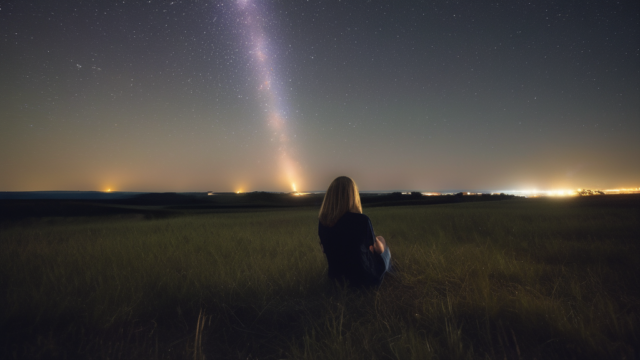
If you’ve ever wished upon a falling star and missed your chance, tonight is the night to finally make good on that ambition. The Lyrid meteor shower is peaking, and conditions across much of the UK are looking promising for a decent show.
The Lyrids are one of the oldest recorded meteor showers in history, with observations dating back over 2,700 years. At their peak, they produce around 18 to 20 meteors per hour, though outbursts have been known to push that closer to 100. It’s not the Perseids, but it’s the best natural light show spring has to offer.
Your best window is between midnight and dawn, when the radiant point near the constellation Lyra climbs highest in the sky. The later you stay up, the more meteors you’re likely to catch. Set an alarm for 2am if you’re serious about it.
Getting away from city lights makes an enormous difference. Light pollution from urban centres washes out the fainter streaks entirely, so if you can drive 20 minutes out to darker countryside, you’ll see significantly more. The Royal Astronomical Society recommends giving your eyes at least 20 minutes to fully adjust to the dark before you start counting.
“You don’t need any equipment at all,” says astronomer Will Gater. “Just lie back, look up, and let your eyes do the work. Binoculars and telescopes actually limit your field of view.”
Dress warmer than you think you need to. Even in late April, lying still on the ground at 2am will leave you shivering faster than you’d expect. Bring a blanket, a flask of something hot, and a red-light torch if you need to check your phone without ruining your night vision.
Face north-east and keep your gaze roughly halfway up the sky, away from the radiant point itself. Meteors that appear close to Lyra leave shorter trails; the ones that streak across a wider arc are the ones worth watching for.
Cloud cover is the only real enemy tonight, so check your local forecast before heading out. If tonight is overcast, the shower remains active through 25 April, though numbers will drop off sharply after the peak.
Whether you catch two meteors or twenty, there’s something quietly wonderful about standing in a dark field, neck craned upwards, reminded that the universe is doing something spectacular whether we’re watching or not.