There’s a fine line between a show of force and a provocation, and Russia crossed it again last week somewhere over the Black Sea.
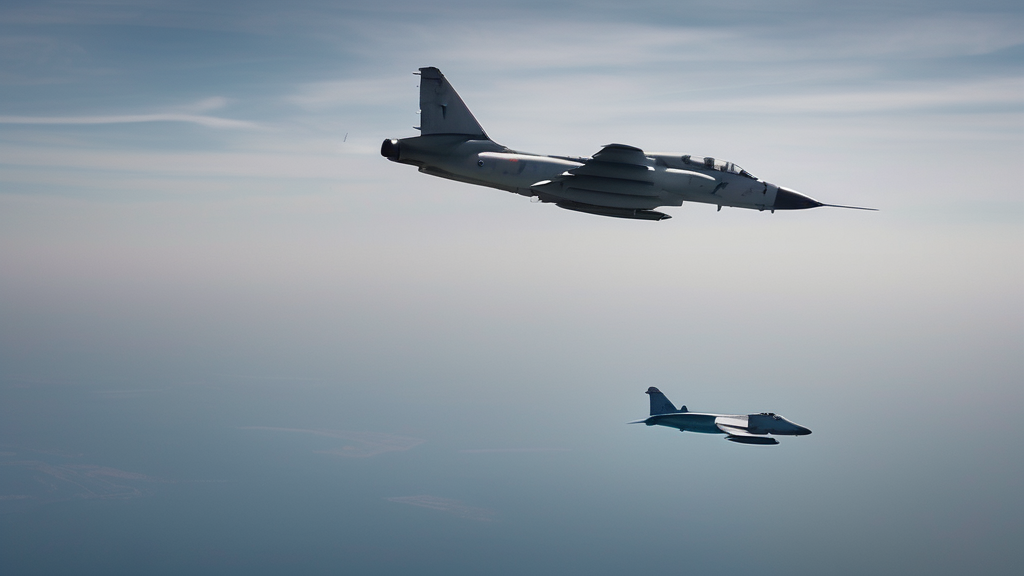
Two Russian Su-27 fighter jets intercepted an unarmed RAF RC-135W Rivet Joint surveillance aircraft during what the Ministry of Defence described as a “routine international flight.” The encounters were brief but aggressive enough that the MoD felt compelled to use the word “dangerous” in its official statement, which isn’t a word Whitehall tends to throw around lightly.
The Rivet Joint is a signals intelligence aircraft. It listens. It doesn’t carry weapons, it doesn’t drop bombs, and it poses no physical threat to anyone. Its entire job is to fly in international airspace and collect electronic data. That’s it. Which makes the Russian response somewhat difficult to characterise as anything other than deliberate intimidation.
The MoD confirmed the Russian jets behaved in a way that put the safety of the crew at risk, though it stopped short of calling it an act of aggression. Defence Secretary Ben Wallace described the intercepts as “irresponsible,” adding that the UK had made its concerns known directly to Moscow through official channels.
“Russia’s actions are a violation of international norms. We will continue to fly in international airspace, as is our right,” a Ministry of Defence spokesperson said.
This isn’t the first time something like this has happened. In 2021, Russian jets reportedly fired warning shots and dropped bombs near another RAF Rivet Joint over the Black Sea, an incident that caused genuine alarm among NATO allies at the time. The pattern is becoming harder to ignore.
The Black Sea has been a flashpoint throughout the war in Ukraine. With Russian forces relying heavily on the region for logistics and maritime operations, any Western surveillance presence is clearly viewed as an irritant in Moscow.
What’s less clear is where the threshold is. NATO nations have consistently maintained their right to operate in international airspace, and that isn’t going to change. But as the war grinds on and tensions in the region stay elevated, the question worth asking is how many of these “incidents” can be logged before one of them goes very badly wrong.