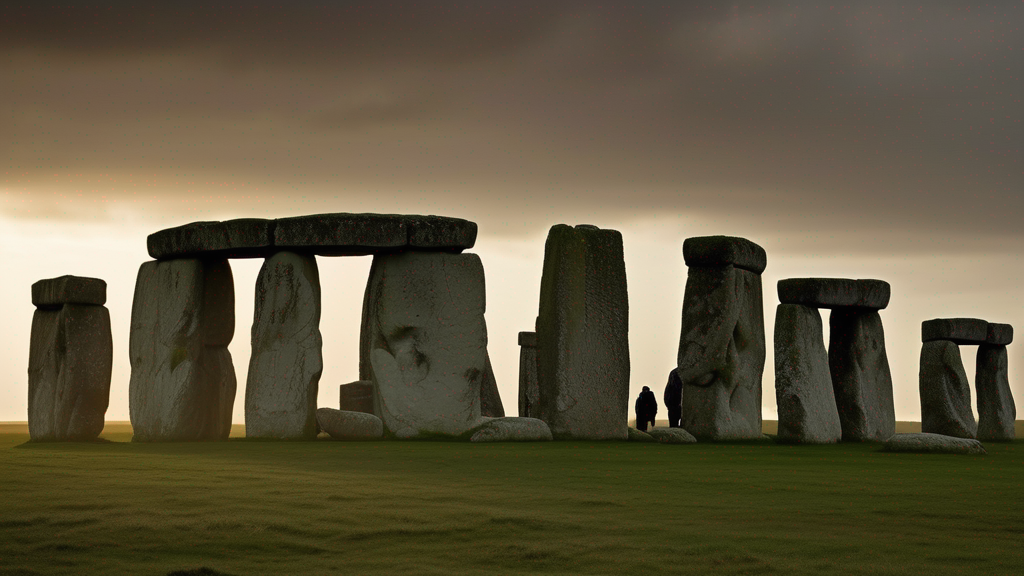
Just before dawn on the summer solstice, tens of thousands of people gather at a circle of ancient stones in Wiltshire and wait, together, for the sun to rise. No phones silenced, no dress code, no collection plate. Just people and the sky and something that’s very hard to explain.
Paganism is quietly having a moment in Britain. The 2021 census recorded around 74,000 people identifying as Pagan in England and Wales, a figure researchers believe significantly undercounts the real number, since many practitioners don’t tick boxes on government forms. The Pagan Federation puts active membership far higher, and interest in druidry, Wicca, and nature-based spirituality has climbed steadily since the early 2000s.
Stonehenge is the most visible expression of all this. English Heritage, which manages the site, opened the solstice to free public access in 2000 after years of restrictions and occasional confrontations with festival-goers. Last year, around 10,000 people attended the summer gathering. This year’s numbers are expected to be higher still.
What draws them isn’t uniform. Some come for the ritual, steeped in reconstructed druidic ceremony. Some come out of curiosity, or grief, or a vague spiritual hunger that organised religion hasn’t managed to satisfy. One attendee described it simply as “the one morning a year I feel genuinely connected to something older than myself.”
It’s tempting to frame this as a reaction to modern anxiety, a turning away from screens and algorithms toward something earthy and tangible. But paganism in Britain has older roots than that. The contemporary revival traces back to the mid-20th century, with figures like Gerald Gardner formalising Wicca in the 1950s. What’s changed is the visibility and, perhaps, the respectability.
The Church of England has seen attendance fall for decades. Younger generations in particular are leaving, or never arriving. Into that space, something is moving: not necessarily a coherent theology, but a desire for ritual, for community, for meaning tied to the natural world rather than to doctrine.
Britain has always had an uneasy relationship with its pre-Christian past. The stones have been here far longer than the churches. Whether the growing crowds at Stonehenge represent a spiritual shift or simply a very good reason to stay up all night remains, for now, an open question.