Last summer, a GP surgery in Bristol turned away patients because the waiting room had hit 38°C. Staff were handing out water bottles and paper fans. In 2025 Britain, that’s no longer a quirky anecdote. It’s a policy failure waiting to be named.
The question of whether the UK should finally embrace air conditioning has been simmering for years, but three consecutive summers of record-breaking heat have moved it from dinner-party debate to genuine political urgency. Around 5% of UK homes currently have air conditioning, compared to roughly 90% in the United States. That gap is starting to look less like cultural restraint and more like a collective act of stubbornness.
The counterargument is well-worn: AC units are energy-hungry, they push heat outside onto streets, and they lock us into a carbon spiral where we cool ourselves by warming the planet. The Climate Change Committee has warned that a mass roll-out of conventional units could add significantly to national grid demand at precisely the peak moments when supply is most strained.
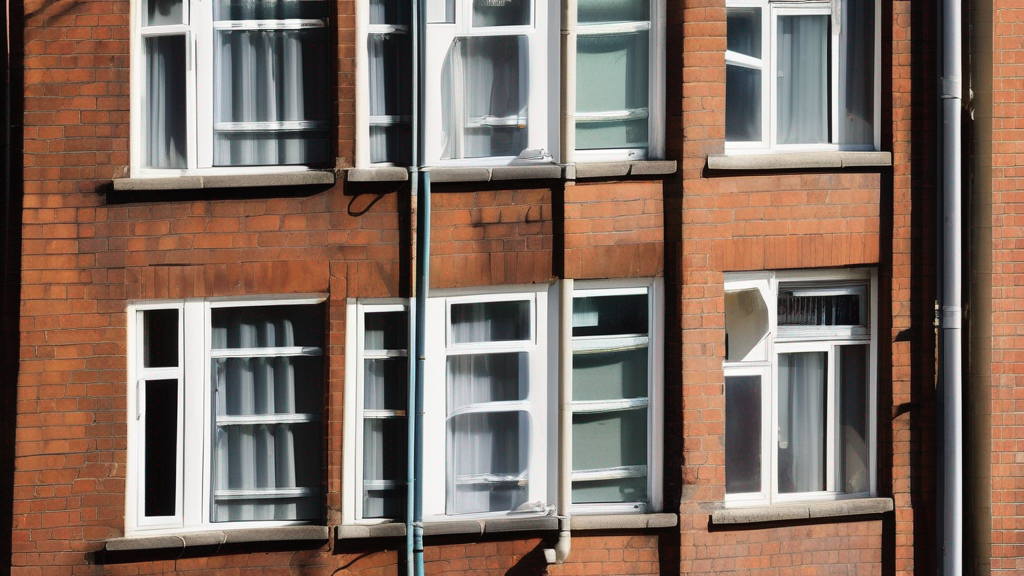
But framing this as a binary choice, comfort versus conscience, misses the nuance. Passivhaus-standard insulation, external shutters, and strategic glazing can keep homes remarkably cool without a single kilowatt of active cooling. The problem is retrofitting a Victorian terrace costs upward of £20,000 per household, and the Government’s current grant schemes barely scratch the surface of that bill.
“We’re having the wrong argument,” one building physicist at UCL put it recently. “The question isn’t AC or no AC. It’s why we’re still building homes in 2025 that can’t cope with temperatures we’ve known are coming for decades.”
There’s a social justice angle here that rarely gets its due. Wealthy homeowners can afford the retrofits or the electricity bills. Renters in poorly insulated flats, the elderly on fixed incomes, shift workers who sleep during the day, they have almost no options. Heat stress isn’t evenly distributed.
Heat pumps with cooling modes offer a middle path, using far less electricity than traditional AC while doubling as winter heating. Uptake remains slow, partly due to upfront costs, partly because British culture still treats sweating through August as something close to a virtue.
The real question isn’t whether we can afford to adapt our homes. It’s whether we can afford to keep pretending we don’t need to.